 Savefinance
: Save Withdrawals at Full Utilization
Save, formerly Solend, is a lending and borrowing protocol on Solana. Withdrawing a supplied asset requires available tokens in that asset’s reserve. At 100% utilization, the entire supply is lent out, so withdrawals and new borrowing of that asset fail until repayments or deposits restore liquidity.
Utilization and reserve parameters
| Measure or parameter | Definition or value | Scope | Practical meaning |
|---|---|---|---|
| Reserve utilization | Tokens borrowed divided by tokens supplied. | The selected asset reserve. | At 100%, no tokens remain available for withdrawals or new borrowing. |
| Account borrow utilization | Borrow balance as a share of the account’s borrow limit. | An individual borrowing account. | Measures use of borrowing capacity, separate from the reserve’s available tokens. |
| Deposit limit | The configured cap on tokens that can be supplied. | Each reserve in a Main or Isolated Pool. | New deposits that could restore liquidity remain subject to this cap. |
| Borrow APR | A variable annual borrowing rate determined by reserve utilization and its rate parameters. | Borrowing from the relevant reserve. | Determines interest costs while a loan remains outstanding. |
Supply balances and available tokens
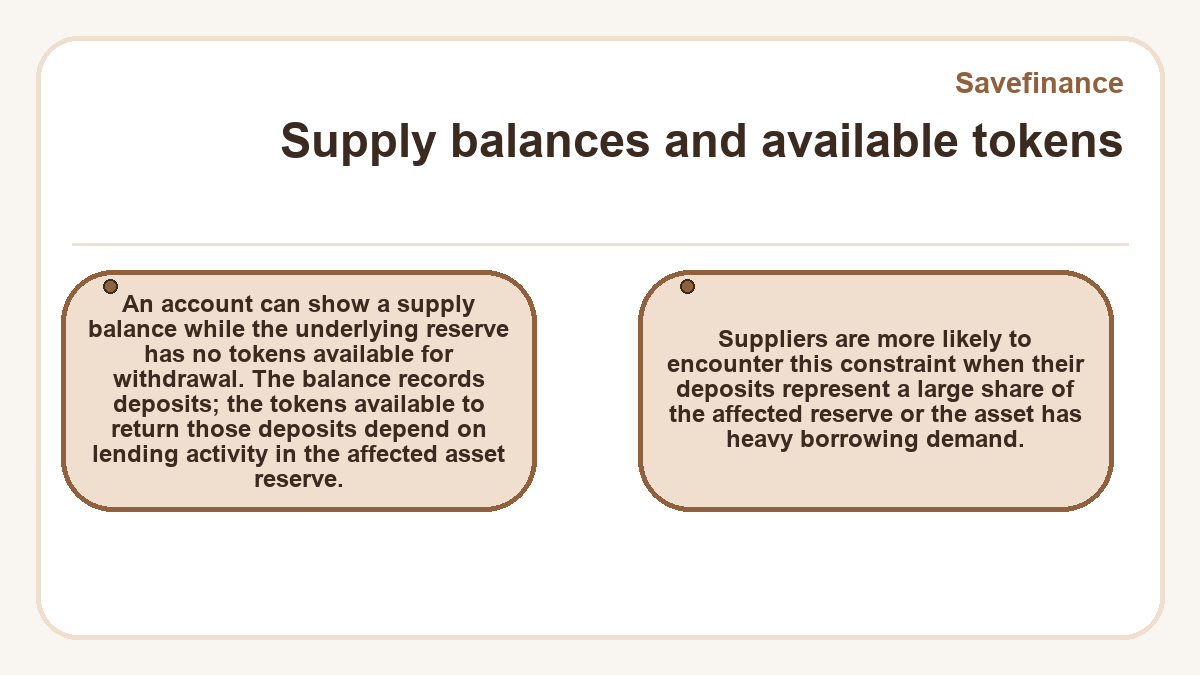
An account can show a supply balance while the underlying reserve has no tokens available for withdrawal. The balance records deposits; the tokens available to return those deposits depend on lending activity in the affected asset reserve.
Suppliers are more likely to encounter this constraint when their deposits represent a large share of the affected reserve or the asset has heavy borrowing demand.
Liquidity returning to the affected reserve
Loan repayments return the borrowed asset to its reserve. New deposits can also replenish that reserve, subject to its deposit limit. The relevant liquidity is in the token being withdrawn; available tokens in another reserve do not fund that withdrawal.
After partial replenishment, a requested withdrawal can still exceed the available tokens. Further borrowing can consume liquidity again. The wait therefore depends on changes in the reserve’s token balance, and a drop below 100% utilization alone does not establish that an entire deposit can be withdrawn.
Borrowing obligations during a liquidity shortage
Repaying debt reduces a borrower’s obligations and replenishes the reserve of the asset being repaid. When the repaid asset differs from the supplied token being withdrawn, that repayment does not directly replenish the withdrawal reserve. Lower account borrow utilization therefore does not establish that the affected reserve has enough liquidity.
Borrow interest is added to outstanding debt per Solana slot. Changes in debt and the relative prices of supplied and borrowed assets can affect the account’s position while withdrawal liquidity is constrained. The account’s borrow limit can restrict collateral withdrawals even after reserve liquidity returns, and its liquidation threshold remains relevant during that wait.
Confirmation status
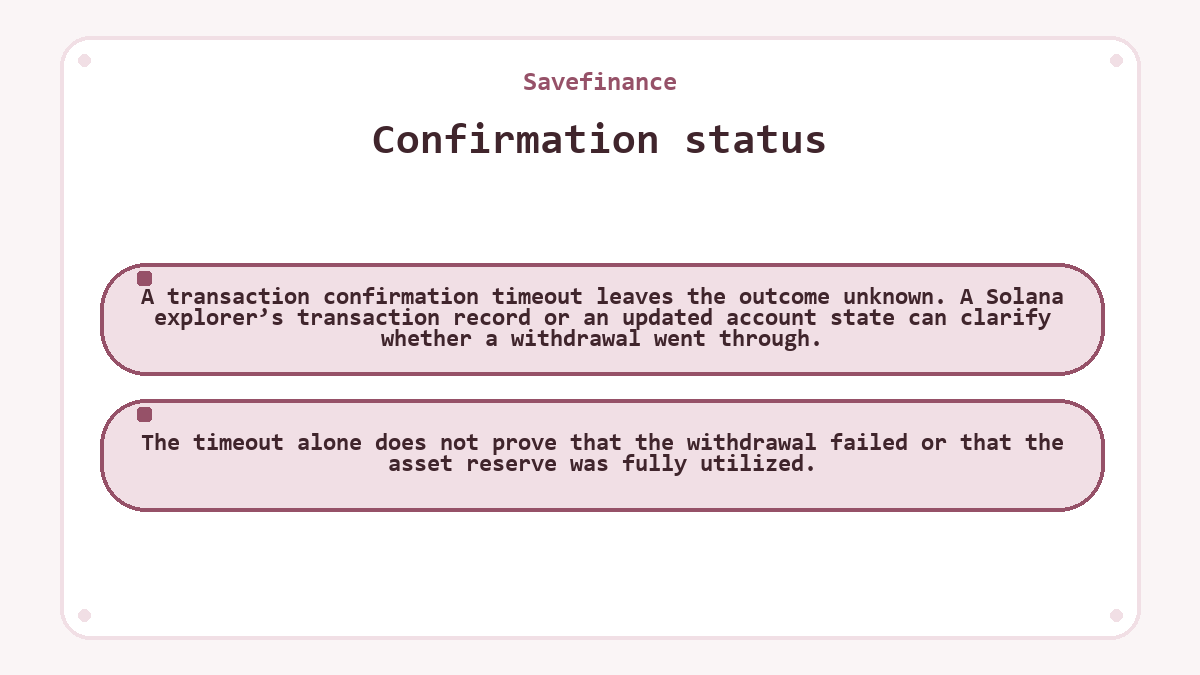
A transaction confirmation timeout leaves the outcome unknown. A Solana explorer’s transaction record or an updated account state can clarify whether a withdrawal went through. The timeout alone does not prove that the withdrawal failed or that the asset reserve was fully utilized.
Updated ·